Week 5 of 10: The Questions That Change Everything
Over the past four weeks, we have explored questions that challenge us to look beyond the surface of familiar biblical stories.
We have asked:
What if there is more to the unseen realm than we realize?
What if the Bible mentions books we no longer have?
What if Enoch saw something we have forgotten?
What if evil began before humanity?
Each question has pointed us toward the same possibility:
The biblical story may be far larger, deeper, and more interconnected than we often realize.
This week, we turn our attention to a place nearly everyone recognizes.
A place painted in children’s books, preached from pulpits, and discussed by believers around the world.
A garden.
But what if it was more than that?
What if the Garden of Eden was more than a beginning?
What if Eden was not merely where humanity started…
but a sacred place set apart for something far greater?
The Garden We Think We Know
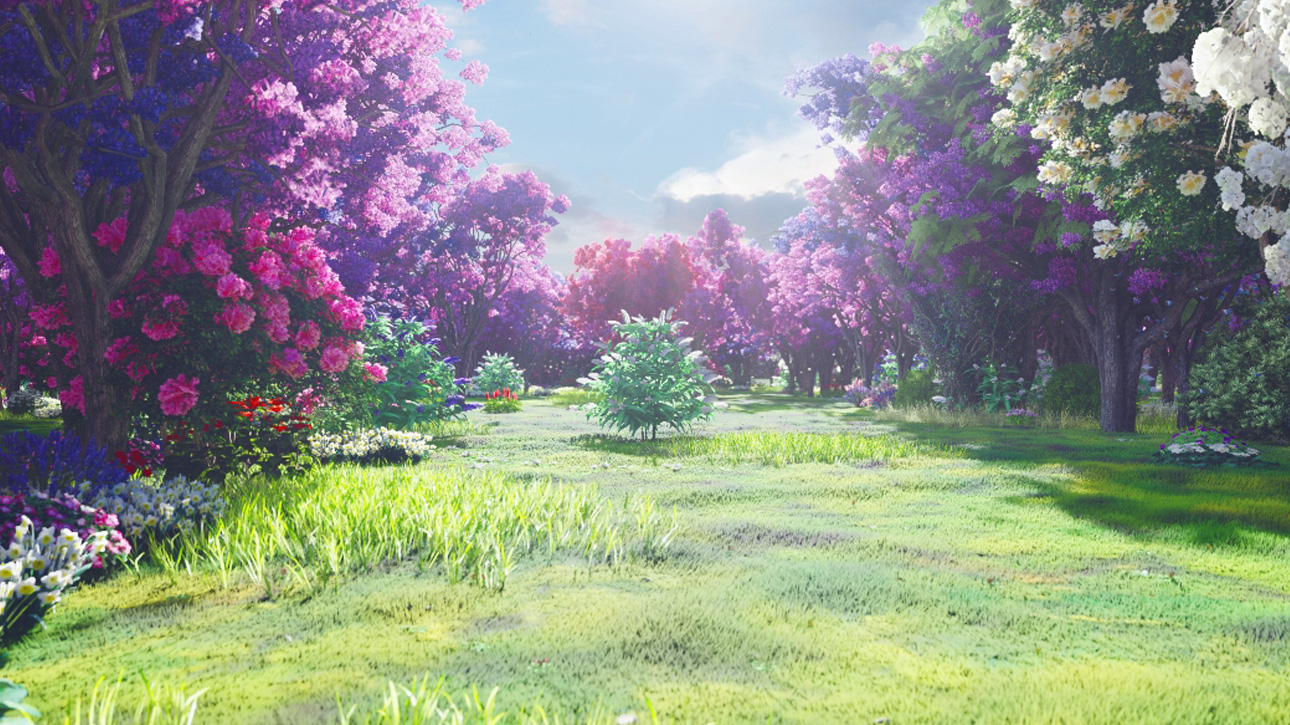
Most of us imagine Eden as a beautiful paradise.
Perfect weather.
Perfect relationships.
Perfect harmony.
And certainly, Scripture presents it as a place of extraordinary beauty and provision.
Yet when we slow down and read carefully, something remarkable begins to emerge.
Eden seems different.
Not merely because it is beautiful.
But because it appears unique.
Separated.
Special.
Set apart from the rest of the world.
Genesis tells us that God planted a garden in Eden and placed Adam there.
Notice what the text does not say.
It does not say Eden was the entire earth.
It says God planted a garden in Eden.
A specific location.
A designated place.
A sacred space.
And that observation raises a fascinating question.
Why Was There a Garden at All?
If the entire world was already perfect, why establish a special place within it?
Why create a garden distinct from its surroundings?
Why place Adam there with a unique assignment?
These questions have led many students of Scripture to wonder whether Eden functioned as something more than a home.
What if it was a meeting place?
A place where heaven and earth intersected in a unique way?
A place where humanity experienced fellowship with God unlike anywhere else on earth?
The Presence of God Changes Everything
One of the most striking details in Genesis is the way God interacts within the Garden.
The text presents an intimacy rarely seen elsewhere.
God is not distant.
He is present.
He walks.
He speaks.
He instructs.
He fellowships.
After the fall, Adam and Eve hear God moving within the Garden and hide themselves.
That moment reveals something profound.
The Garden was not simply a location.
It was a place of relationship.
A place where humanity enjoyed direct fellowship with its Creator.
And perhaps that is what made Eden truly extraordinary.
Not the trees.
Not the rivers.
Not even the absence of suffering.
The presence of God.
The First Assignment
Many people think Adam’s primary purpose was simply to live in paradise.
But Scripture describes something more active.
Adam was given responsibility.
He was instructed to tend and keep the Garden.
These words carry meaning beyond simple gardening.
They describe stewardship.
Guardianship.
Service.
Purpose.
Adam was not merely a resident.
He was entrusted with a sacred assignment.
What if Eden was humanity’s first place of preparation?
A place where mankind would learn to walk with God before expanding His purposes throughout the earth?
The Tree in the Center
Then there is the matter of the trees.
Particularly two of them.
The Tree of Life.
And the Tree of the Knowledge of Good and Evil.
Why place such trees in the center of the Garden?
Why make choice part of paradise?
Because love without choice is not love.
Trust without freedom is not trust.
Relationship requires the possibility of response.
From the very beginning, humanity was not created as a machine.
Humanity was created with dignity.
With responsibility.
With the ability to choose.
The Garden was not merely a place of blessing.
It was a place where trust could be exercised.
The Tragedy of the Fall
When Adam and Eve chose rebellion, something terrible happened.
But often we focus only on what they lost.
What they lost was significant:
Innocence
Security
Harmony
Access to the Tree of Life
Yet perhaps the greatest loss was relational.
They hid from the One they were created to walk with.
Fear entered where trust once existed.
Distance entered where fellowship once flourished.
The tragedy of Eden was not simply expulsion from a location.
It was separation from intimate communion with God.
Why Eden Still Matters
This is where the story becomes incredibly important for us today.
Because Eden is not merely about the past.
It points toward the future.
The Bible begins with a garden.
And it ends with restored access to the Tree of Life.
The story moves from fellowship lost…
to fellowship restored.
From separation…
to reunion.
From exile…
to homecoming.
Throughout Scripture, God is not simply trying to get people into heaven.
He is working to restore what was lost in Eden.
Relationship.
Presence.
Communion.
Life.
What If Eden Was a Picture of God’s Ultimate Plan?
Perhaps Eden was never intended to be merely the first chapter.
Perhaps it was also a preview.
A glimpse of God’s desire for humanity from the beginning.
To dwell with His people.
To walk with them.
To know them.
And to be known by them.
When viewed this way, Eden becomes much more than ancient history.
It becomes a window into the heart of God.
A reminder of what was lost.
And a promise of what He intends to restore.
The Question Beneath the Question
So perhaps the deeper question is not:
“Where was Eden?”
But rather:
“What was God showing us through Eden?”
What if the Garden was never merely about beginnings?
What if it was revealing God’s ultimate destination for humanity all along?
A restored relationship.
A restored creation.
A restored fellowship between heaven and earth.
Your Turn
When you think about Eden, what stands out most to you?
Its beauty?
Its tragedy?
Its mystery?
Or its promise?
And do you think Eden was simply the beginning of humanity’s story…
or a glimpse of its intended future?
Next week we continue our journey with a question that has sparked discussion for centuries:
What If “Let Us Make Man” Means More Than We Think?
Who was God speaking to in Genesis?
And what might that reveal about the nature of divine reality itself?
— Carl Schulz
Insight Ministry