INSIGHT MINISTRY | BEYOND THE QUESTION | BLOG 19
Was humanity created in the middle of a conflict that had already begun?
There is a question I have wrestled with for years.
It is a question that reaches beyond the Garden of Eden, beyond Adam and Eve, and perhaps even beyond the creation of the world as we know it.
What if the great spiritual conflict described throughout Scripture began long before humanity ever appeared?
What if the serpent who entered the Garden was not beginning a rebellion but continuing one?
And what if the story of humanity’s redemption is part of something far greater than we have traditionally imagined?
In our previous blogs, we have explored the unseen realm, the sons of God, the divine council, and the ancient writings that help illuminate the world of Scripture.
Now we arrive at a question that brings many of those subjects together.
What really happened in Heaven before the fall of humanity?
And perhaps more importantly, how much does the Bible actually tell us?
Before There Was a Serpent in the Garden
Most Christians begin the story of evil in Genesis chapter three.
Adam and Eve are living in the Garden. God has given them everything they need. They enjoy fellowship with their Creator.
Then suddenly, the serpent appears.
He questions God’s instructions.
He challenges God’s motives.
He persuades Eve that disobedience will lead to something greater.
But have you ever stopped to consider something?
The serpent was already opposed to God when he entered the Garden.
He did not become deceptive after speaking with Eve.
He arrived with deception already in his heart.
His intentions were already established.
His opposition to God’s purposes was already evident.
So where did that opposition begin?
Genesis does not tell us.
And that silence has left thoughtful believers asking questions for centuries.
A War in Heaven
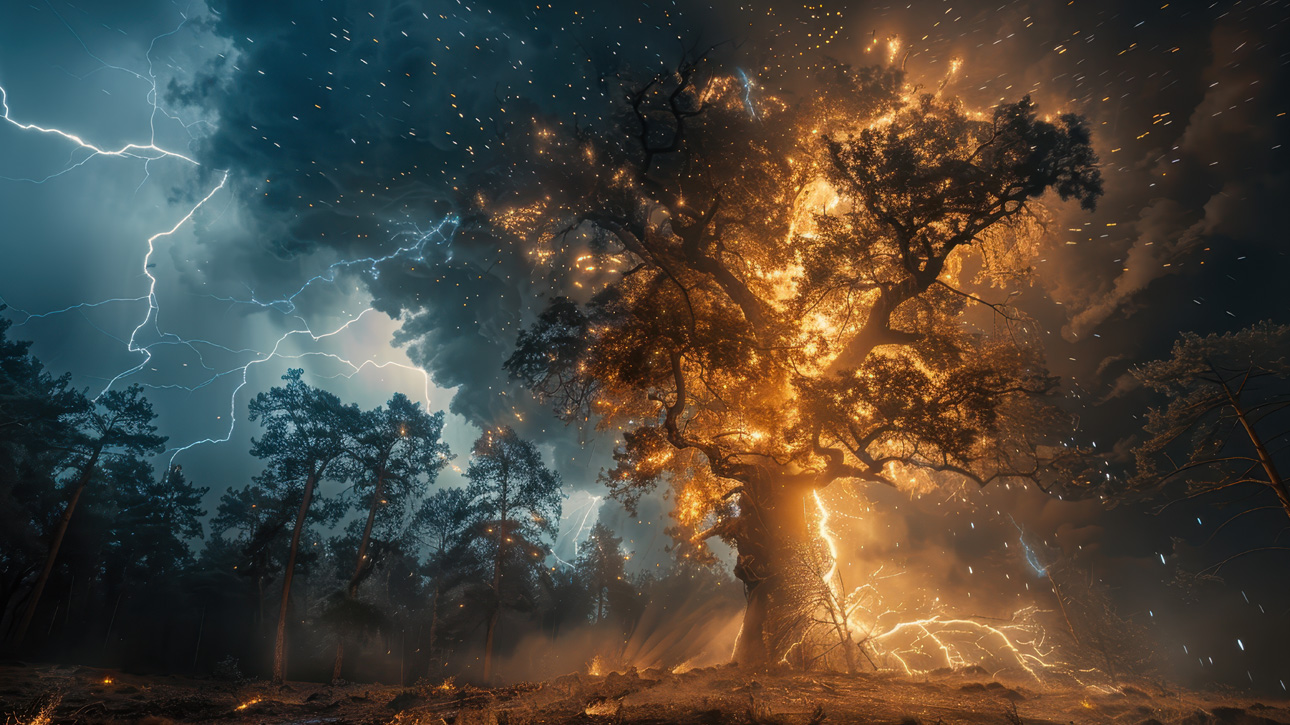
One of the most extraordinary passages in Scripture appears in Revelation chapter twelve.
John describes a conflict unlike anything humanity has ever witnessed.
“Then war broke out in heaven. Michael and his angels fought against the dragon, and the dragon and his angels fought back.” — Revelation 12:7 (NIV)
Imagine that for a moment.
War. In Heaven.
Not between earthly kingdoms. Not between human armies. But among spiritual beings.
Michael and his angels on one side. The dragon and his angels on the other.
Revelation identifies the dragon as the ancient serpent, the devil, or Satan.
And then we read that the dragon and his angels were defeated and lost their place in heaven.
It is an astonishing picture.
But it raises an important question. When did this war take place?
Many Christians have traditionally understood this passage as describing Satan’s original rebellion before the temptation in Eden.
Others interpret it as portraying the heavenly consequences of Christ’s death, resurrection, and exaltation.
Still others see it as describing an end-times conflict.
Revelation is apocalyptic literature, filled with symbolism, visions, and events presented from a heavenly perspective.
We should therefore be careful about building an exact chronology from one passage.
But regardless of how we understand its timing, Revelation reveals something remarkable.
The spiritual realm is not presented as a place without conflict.
And the opposition to God involves more than one rebellious being.
The Morning Star and the Desire for Power
Another passage frequently enters this discussion. Isaiah chapter fourteen.
There we encounter a striking description of someone who desires to rise above his appointed position.
“I will ascend to the heavens; I will raise my throne above the stars of God…” — Isaiah 14:13 (NIV)
The passage continues with declarations of ambition and self-exaltation.
Traditionally, many Christians have associated these words with Satan’s rebellion.
The Latin term Lucifer, meaning light-bearer, became connected with this interpretation through the history of Bible translation.
The Hebrew expression is commonly rendered “morning star, son of the dawn.”
But we must recognize something important.
In its immediate historical context, Isaiah fourteen is a taunt against the king of Babylon.
The question is whether the prophet’s language also points beyond that earthly ruler to a deeper spiritual reality.
Many Christian interpreters have believed that it does. Others believe the passage should be understood primarily within its historical setting.
This is exactly the kind of question our series was created to explore. Not to force an interpretation. But to examine the possibilities carefully.
Because the theme itself is unmistakable. Pride. Ambition. The desire to possess authority that belongs to God alone.
And if that sounds familiar, it should. It is remarkably similar to the temptation offered in Eden.
“You will be like God.”
Could the same desire have been at work in both places?
The Guardian Cherub
Ezekiel chapter twenty-eight introduces another extraordinary passage.
The prophet addresses the king of Tyre. Yet the language moves into descriptions that have fascinated biblical scholars for generations.
The figure is associated with Eden. With precious stones. With beauty. With an exalted position. And with a fall brought about by pride and corruption.
The passage describes an anointed guardian cherub in imagery that many Christians have interpreted as referring to Satan before his fall.
But again, the immediate subject is an earthly ruler.
Does Ezekiel use heavenly imagery to describe the arrogance of a human king?
Or does the description also reveal something about a spiritual rebellion behind earthly evil?
Scripture does not explicitly settle that question.
Nevertheless, the connection between beauty, privilege, pride, and downfall is worth considering.
Because it reveals something about rebellion that we sometimes overlook.
Evil does not always begin with hatred of what is good. Sometimes it begins with the desire to possess what belongs to another.
The desire for greater authority. Greater recognition. Greater power.
Until gratitude becomes entitlement. And service becomes ambition.
What About the Sons of God?
In our earlier blogs, we examined the Hebrew expression bene ha-elohim, commonly translated “sons of God.”
In Job chapters one and two, these beings appear before the Lord.
Job chapter thirty-eight describes the morning stars singing together and the sons of God shouting for joy when God established the foundations of the earth.
Consider the significance of that scene.
According to the passage, heavenly beings were present to celebrate God’s creative work.
The earth was being established. Creation was unfolding. And Heaven rejoiced.
But later, in the biblical story, we encounter rebellion, accusation, and spiritual opposition.
What happened between those moments?
Were all heavenly beings originally united in joyful service?
Did rebellion arise afterward?
Was the conflict already underway before Adam and Eve entered Eden?
The Bible gives us glimpses. But not a complete historical narrative.
And this is where ancient literature becomes particularly interesting.
What Ancient Writings Add to the Conversation
The Book of Enoch, especially the section commonly called the Book of the Watchers, describes a rebellion involving heavenly beings who cross divinely established boundaries.
It expands upon themes associated with Genesis chapter six.
These writings were influential within portions of ancient Judaism.
They also help explain why references to rebellious angels, judgment, and imprisonment appear in the New Testament letters of Jude and Second Peter.
But we must be careful.
The Watchers’ rebellion described in First Enoch is not automatically identical to the original fall of Satan.
Nor does the Book of Enoch provide an unquestionable chronology of the war described in Revelation.
These are distinct traditions and passages that interpreters have sometimes brought together.
Still, their existence demonstrates something important.
Ancient Jewish thinkers were deeply interested in the origins of evil and the activities of heavenly beings.
They were asking questions that many modern Christians have only recently begun reconsidering.
Studying those writings does not require us to accept every detail as inspired revelation.
It allows us to understand how people closer to the biblical world explored these mysteries.
And that has genuine value.
Was Humanity Created Into an Existing Conflict?
Now we arrive at the question I find particularly fascinating.
Suppose spiritual rebellion began before Adam and Eve.
Suppose the serpent entered Eden already committed to opposing God’s purposes.
What might that mean for our understanding of humanity?
Genesis tells us that God created human beings in His image.
He gave them responsibility. He entrusted them with stewardship over the earth. He established a relationship with them.
And almost immediately, the serpent challenged that relationship.
His attack was not primarily against humanity’s physical strength. It was against their trust in God.
He wanted them to question God’s goodness. To doubt His intentions. To believe that independence from Him would bring something better.
And that raises a possibility.
What if humanity became a target precisely because humanity was created to reflect the God whom the adversary opposed?
Think about that.
If the enemy could corrupt those who bore God’s image, he could strike at something precious to the Creator.
This is a theological possibility, not a fact explicitly explained in Genesis.
But it offers a perspective worth considering.
The temptation in Eden may not have been an isolated event.
It may have been one earthly expression of a much larger spiritual conflict.
The Battle Was Never Between Equals
There is something we must make absolutely clear.
If there was a rebellion in Heaven, it was never a war between two equal gods.
Satan is not God’s opposite in power or authority. He is a created being. God is the Creator.
The distinction is immeasurable.
Scripture never presents the Lord as struggling to maintain His throne against an equally powerful rival.
God’s sovereignty is never in doubt.
Whatever freedom spiritual beings possess, they exist because God created them.
And whatever rebellion may occur, it cannot overturn His ultimate purposes.
That truth matters.
Because sometimes discussions about spiritual warfare unintentionally make evil appear greater than it is.
We become fascinated with the enemy.
We spend so much time examining darkness that we forget the greatness of the Light.
But the biblical story does not end with Satan. It ends with the victory of Jesus Christ.
The Plan of Redemption
And here is where this discussion becomes deeply personal.
If evil existed before humanity fell, God was not surprised by what happened in Eden.
The Bible presents redemption as something rooted in God’s eternal purpose.
Ephesians chapter one speaks of God’s choice in Christ before the creation of the world.
First Peter chapter one describes Christ as chosen before the creation of the world and revealed in these last times.
These passages do not answer every question about the chronology of heavenly rebellion.
But they reveal something far more important.
God’s redemptive purpose was not an improvised response to an unexpected disaster.
Before you were born, God knew the cost of redemption.
Before you ever failed, He knew your need for grace.
Before humanity experienced its first act of disobedience, the divine purpose centered upon Christ.
That should change how we understand the story.
Because the central theme of Scripture is not the greatness of Satan’s rebellion.
It is the greatness of God’s love.
Our Family Story Continues
Remember what we discussed when we began this new series.
The Bible introduces us to the family story of humanity and God’s unfolding plan to bring people into His family through Jesus Christ.
Adam and Eve failed. Their descendants failed.
Generations repeated the same patterns of pride, selfishness, rebellion, and distrust.
And if we are willing to admit it, those patterns are still present in us.
But God did not abandon His purpose.
He continued working through imperfect people.
Through Abraham. Through Isaac. Through Jacob. Through Israel. Through the prophets.
Until the promised Redeemer came.
And Jesus did what humanity could never accomplish on its own.
He remained faithful. He resisted temptation. He obeyed the Father. He gave His life.
And through His resurrection, He opened the way for our redemption.
Whatever happened in Heaven before Eden, the answer to humanity’s brokenness was ultimately revealed at Calvary.
The Question Beneath the Question
So did the war in Heaven begin before Adam and Eve?
It is possible. Many Christians have understood the biblical evidence that way.
But Scripture does not provide a complete chronological account that allows us to state every detail with certainty.
And perhaps we should be comfortable admitting that.
Because our faith does not depend upon knowing the exact moment Satan rebelled.
Our faith rests in knowing the One who will ultimately bring every rebellion to an end.
Still, I believe these questions matter.
They encourage us to read Scripture more carefully.
They challenge assumptions we may have inherited without examination.
They remind us that God’s creation includes realities beyond our immediate understanding.
And they help us appreciate the extraordinary scope of His redemptive purpose.
Perhaps humanity’s story began within a conflict already underway.
But humanity’s hope was never dependent upon winning that conflict through its own strength.
Our hope has always rested in God. And His answer has always been Jesus Christ.
Your Turn
As you consider the possibility of a heavenly rebellion before Eden, I would encourage you to return to Genesis chapter three, Isaiah chapter fourteen, Ezekiel chapter twenty-eight, and Revelation chapter twelve.
Read them carefully. Consider their original contexts. Ask what they explicitly teach.
Then ask what connections might reasonably be drawn between them.
And I would love to hear your thoughts.
Do you believe Satan’s rebellion occurred before the creation of humanity? And if so, how does that possibility change the way you understand the Garden of Eden?
Coming Next Week — Blog 20
What If Eden Was the First Battlefield on Earth?
If spiritual rebellion began before humanity, why did the serpent come to Eden?
Why was humanity the target?
What was so significant about God’s image being placed within human beings?
And could the Garden have represented something far greater than a beautiful place where two people lived?
Next week, we will explore the possibility that Eden was not simply the location of humanity’s first failure.
It was the place where an ancient spiritual conflict entered the human story.
And where God’s extraordinary plan of redemption began to unfold before our eyes.
Until then, keep reading. Keep studying. Keep asking questions.
Because sometimes the question we have been afraid to ask is the very question that opens the door to a deeper understanding of God.
What if?
Carl Schulz
Insight Ministry LLC
What If — The Journey
insightministry.org
Exploring the mysteries of Scripture. Discovering the greatness of God.